Water Where It Should Not Be: A Receiver Drain Audit for UK Compressed-Air Plant
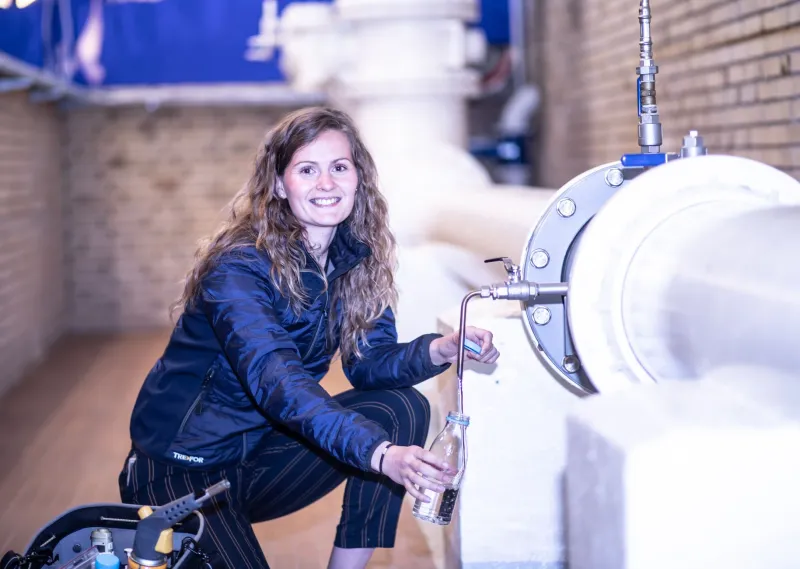
Compressed-air receivers are often regarded as passive vessels: they store air, smooth pressure fluctuations and give the compressor room a little breathing space. In practice, they also collect water. Condensate forms as compressed air cools after leaving the compressor, and the receiver is one of the first places where that moisture can settle. If the drain beneath it is blocked, failed or simply overlooked, the vessel becomes a wet sump rather than a separator.
The consequences are rarely dramatic at first. A little water at the bottom of a receiver may go unnoticed for months. Over time, however, standing condensate promotes internal corrosion, carries corrosion products downstream and can be drawn into the air stream during changes in demand. In winter, exposed drain lines and receiver legs become freeze points. The question for maintenance teams is not whether condensate will appear, but whether it is being drained down reliably or drawn into the system.
Why receiver water deserves a scheduled look
A compressed-air system is never completely dry. Atmospheric air always contains some water vapour, and compressing it raises the partial pressure of that vapour. When the air cools in the receiver, aftercooler or pipework, water condenses out. The receiver acts as a collection point, which is useful provided the water is removed in a controlled way.
Automatic drains are the usual solution. They may be timer-operated, level-sensing or mechanical float types. Each has failure modes. A timer drain can be set incorrectly, blocked by scale or left in a permanently open position that wastes compressed air. A level-sensing drain may suffer a fouled probe or a failed solenoid. A float drain can stick after months of inactivity or become clogged with emulsion and rust particles. Manual ball valves are simple, but they depend entirely on someone remembering to open them.
The hidden cost is not only corrosion. Water carried downstream can overload filters, disturb refrigerated dryers, affect pneumatic instruments and contribute to product contamination in sensitive processes. In food, packaging, electronics and laboratory environments, moisture carryover is an air-quality issue rather than a maintenance inconvenience. Even in general engineering workshops, wet air accelerates wear in cylinders, valves and tools.
Drain down or draw in?
A functioning drain removes condensate from the low point of the receiver and discharges it safely. That is drain-down operation. A neglected or failed drain allows water to accumulate until it is picked up by the air flow and carried into downstream pipework. That is draw-in operation, and it is considerably more expensive to correct.
The distinction matters because a receiver can appear normal on a pressure gauge while holding a significant volume of water. Pressure alone tells you nothing about condensate level. Nor does the presence of an automatic drain prove that it is working. Drains are out of sight, often tucked behind the vessel, and their discharge may be piped to a remote location where a failure is not obvious.
A useful audit therefore combines physical inspection with a functional test. It should be carried out under the site permit-to-work system and with full regard to pressure-system safety. No drain should be opened or maintained unless the relevant isolation and depressurisation procedure has been followed.
A practical inspection route
Start by listing every receiver and every point where condensate can collect. This should include main air receivers, receiver legs, filter bowls, dryer separators, condensate pots and any low points in the distribution main. Older sites often have additional vessels or dead legs that have been forgotten since the last modification.
For each automatic drain, establish its type, set point and discharge route. Observe at least one complete cycle where this is safe and possible. Listen for solenoid operation and look for discharge into a clear container. A drain that produces nothing may be blocked, isolated or incorrectly set. A drain that discharges continuously is wasting air and should be repaired without delay.
For manual drains, check that the valve can be operated fully and that the discharge is not obstructed. A ball valve that is stiff or has not been moved for a long period should be exercised and recorded. Where a receiver has a drop leg or low-point pocket, confirm that it is actually the lowest point and that the drain connection is not sitting above a sludge layer.
Inspect strainers and filters upstream of automatic drains. Rust scale, pipe dope and elastomer debris are common causes of blockage. Check discharge pipework for sagging sections, incorrect falls or open ends that could create a trip or freeze hazard. Confirm that any oil-water emulsion is being dealt with according to site environmental procedures; condensate from oil-lubricated compressors should not be discharged indiscriminately.
Finally, look downstream. Moisture indicators, dew-point readings and filter differential pressures provide evidence of whether water is being carried over. A rising filter differential pressure after a drain repair may indicate that corrosion products have already moved into the system.
A 2026 winter-readiness checklist for drains
As winter 2026 approaches, the priority is to find the points that can freeze and the drains that will become inaccessible in bad weather. A short, documented checklist is usually more effective than a broad inspection with no record.
- Confirm that every receiver drain has been functionally tested within the agreed interval and that the result is recorded.
- Check exposed drain lines for correct fall, lagging where required and protection from frost. Pay particular attention to outdoor receivers and pipework routes through unheated buildings.
- Verify that automatic drain heaters, where fitted, are working and that electrical connections are sound.
- Clear strainers and remove sludge from low points before the first sustained cold spell.
- Ensure that manual drain valves are accessible, labelled and not obstructed by stored materials.
- Check that drain discharge points are safe, visible and not liable to create ice on walkways or loading areas.
- Review moisture indicator condition and replace desiccant or indicator elements where necessary.
- Keep critical spares available: solenoid coils, strainer elements, level sensors and suitable manual valves.
Making the audit routine
Receiver drains are simple components, but they sit at the boundary between air quality and system reliability. A drain that fails quietly can be more damaging than a compressor fault that announces itself loudly. The remedy is a scheduled audit that treats condensate as a process issue rather than a housekeeping afterthought.
A sensible record should capture the receiver reference, drain type, test result, discharge condition and any corrective action. Over time, that record shows which drains are repeatedly blocking and whether winter preparation is actually reducing moisture carryover. For UK plants facing damp conditions and cold snaps, that small administrative discipline is often the difference between a dry receiver and a downstream problem waiting to be drawn in.