Records Before Relief: A Pressure-System Readiness Audit for UK Fluid-Power Plant

Photo: Unknown authorUnknown author, Public domain, via Wikimedia Commons
A pressure-system review should not begin with a scramble through filing cabinets. It should begin with the plant itself, then test whether the paperwork describes what is actually installed, protected and maintained. Under the Pressure Systems Safety Regulations 2000, the written scheme of examination is a central control document, but for the fluid-power engineer it is also a reliability record. It shows whether accumulators, receivers and relief devices are understood as operating assets rather than background equipment.
The most useful preparation for a 2026 PSSR review is therefore an audit of the pressure envelope. The aim is not to create a parallel set of documents for the inspector. It is to find the gaps that already affect maintenance decisions: an accumulator added without a scheme revision, a receiver relief valve with no traceable setting, or a repair history that stops at the last invoice.
Start with the pressure envelope, not the folder
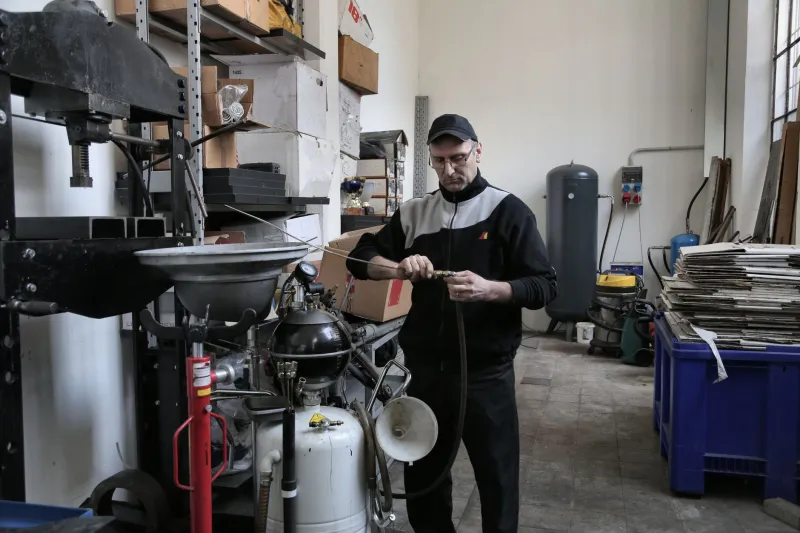
Before opening the written scheme, walk the plant and list every pressure vessel and protective device in scope. For hydraulic power units, this normally means accumulators, whether bladder, diaphragm or piston types. For compressed-air plant, it means receivers, separators and any other vessels identified by the competent person. Record the asset tag, location, design pressure, volume and duty. Photograph the nameplate where it is legible.
The first audit test is reconciliation. Does the asset register match the plant? Are there receivers in service that do not appear in the scheme? Has an accumulator been relocated, replaced or changed in duty since the last revision? A scheme that no longer describes the installed system is a reliability warning as much as a compliance gap. Maintenance teams may be working to assumptions that the scheme does not support.
Read the written scheme as an operating map
A written scheme of examination should be prepared or certified by a competent person. In audit terms, check that the scheme is current, that it covers every relevant vessel and that it specifies the examinations and intervals required. Look for the conditions attached to the scheme, such as external examination, internal examination or specific tests. Then compare those requirements with the maintenance planner.
A frequent gap is revision control. The scheme may be valid in date but silent on a modification. A new accumulator, a changed receiver duty or a revised relief arrangement can alter the examination needs. If the scheme has not been reviewed after a change, ask the competent person whether a revision is required. This is not a paperwork formality; it is how the examination regime stays aligned with the plant.
Treat relief valves as evidence, not accessories
Relief valves and safety valves are the last line of defence for pressure systems. Their settings should be traceable to the scheme and to the design intent. On hydraulic power units, check the relief valve setting against the pump compensator or system design pressure. On compressed-air plant, check receiver safety valves and any downstream protection. Confirm that valves are not isolated, that vents are clear and that labels are legible.
The audit should capture set pressure, test date, test method and the identity of the test provider. Where a valve has been adjusted on site, there should be a record of who authorised the change and why. A missing setting is not simply an administrative omission. It means the protection margin is unknown. If the setting cannot be verified from records, treat it as a planned verification task rather than assuming the last known value still applies.
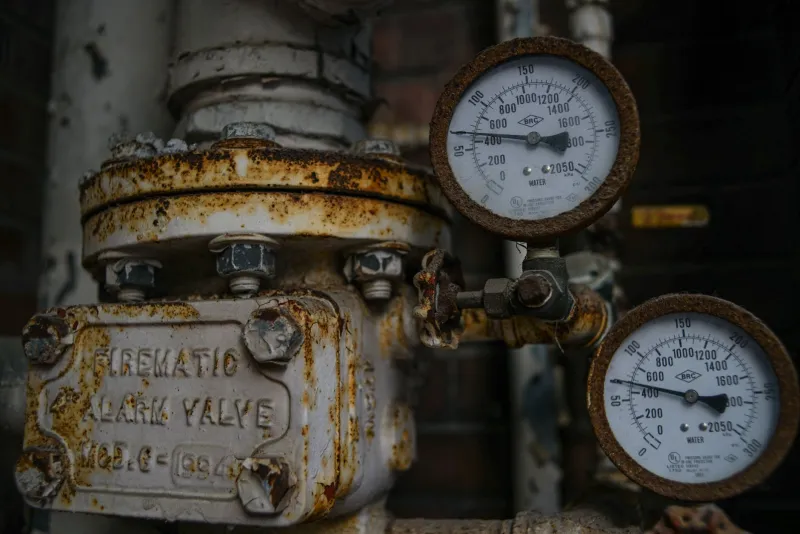
Gauges deserve the same scrutiny. A relief valve setting is only meaningful if the pressure indication used to verify it is calibrated and readable. Check gauge ranges, units and condition. A gauge that is permanently at the top of its scale tells the maintenance team very little about normal operation or transient pressure.
Follow the repair history through the pressure boundary
Repair records are often the weakest part of the audit. For compressed-air receivers, look for internal inspection reports, corrosion treatment and any repair or modification to the shell. For hydraulic accumulators, look for bladder or diaphragm replacement, precharge records and any work on the pressure boundary. The question is not whether every minor maintenance task is documented. It is whether work that affects pressure integrity or protective settings can be traced.
Where records are absent, do not immediately assume the worst. Mark the gap, inspect the asset and seek evidence from the contractor or competent person. However, repeated gaps in the same area suggest a control problem. If relief valve adjustments, accumulator precharge or receiver repairs are routinely undocumented, the maintenance system is allowing pressure-system knowledge to leave the site with the technician.
A practical checklist for the audit
Use a simple checklist that can be applied to hydraulic and compressed-air plant without becoming a second bureaucracy:
- Asset register reconciled with the installed pressure vessels and protective devices.
- Written scheme current, with revisions reflecting modifications and duty changes.
- Examination schedule matched to the scheme, with reports available and actions closed.
- Relief valve set pressures recorded, labelled and traceable to the design intent.
- Pressure gauges calibrated, readable and suitable for the operating range.
- Repair and modification history traceable across the pressure boundary.
- Accumulator precharge and receiver drain records available where relevant.
- Open actions assigned, dated and supported by evidence of completion.
- Competent person consulted where the scheme or scope is unclear.
Turn the gaps into reliability actions
A pressure-system audit should end with a short, prioritised action list. Protect the pressure boundary first: unresolved relief valve settings, missing examination reports and undocumented repairs should be addressed before cosmetic record improvements. Then close the routine gaps that affect reliability, such as precharge records, drain logs and gauge calibration.
The result is a more useful review. Instead of treating the written scheme as a document produced for inspection, the maintenance team can use it to confirm that the plant is understood, protected and maintainable. That is the practical value of the audit: fewer surprises during the review, and fewer unplanned pressure-system faults afterwards.